



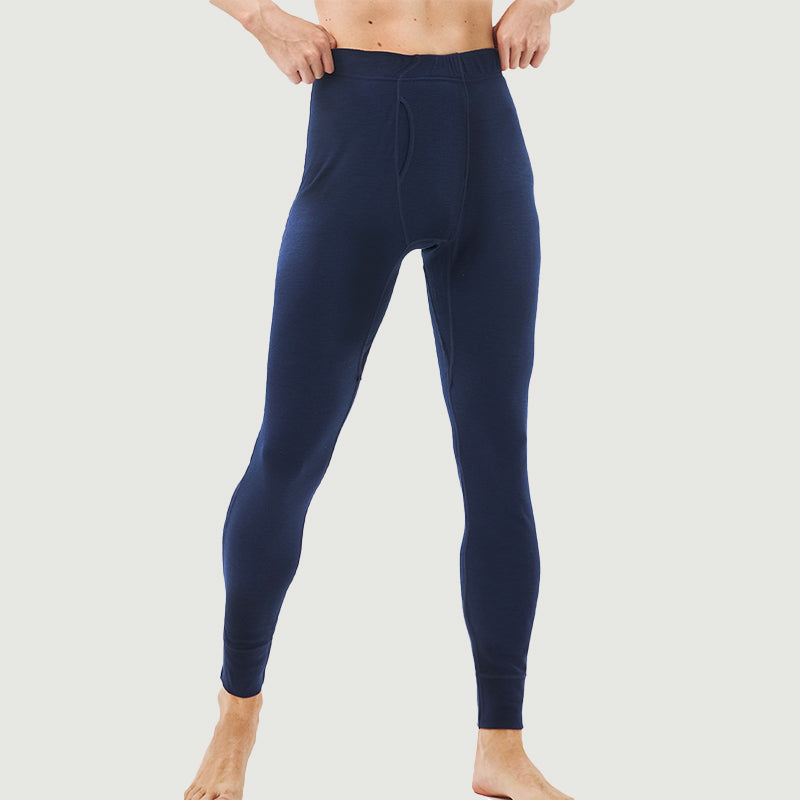
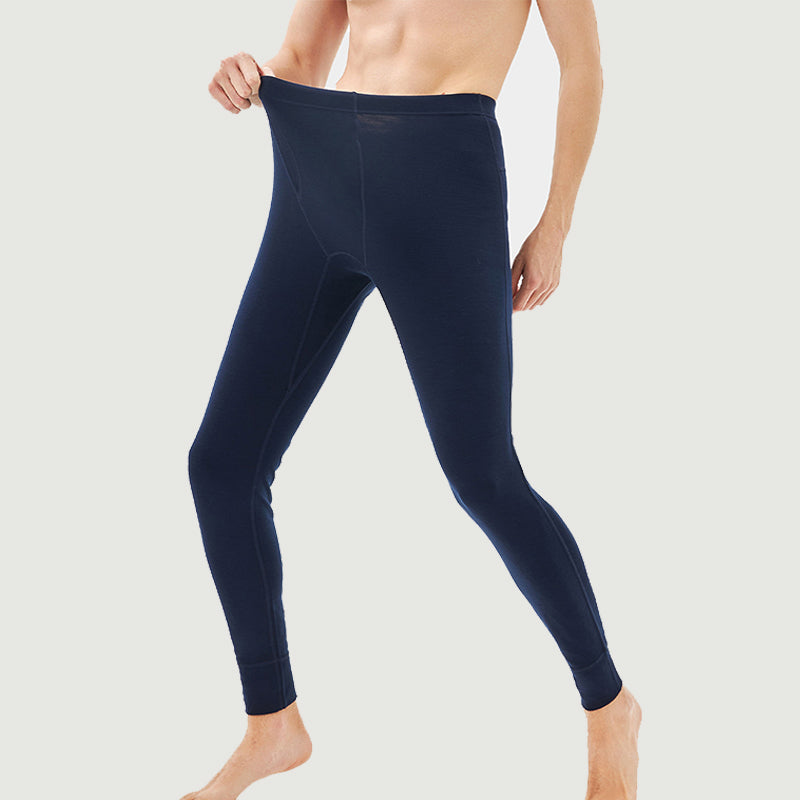


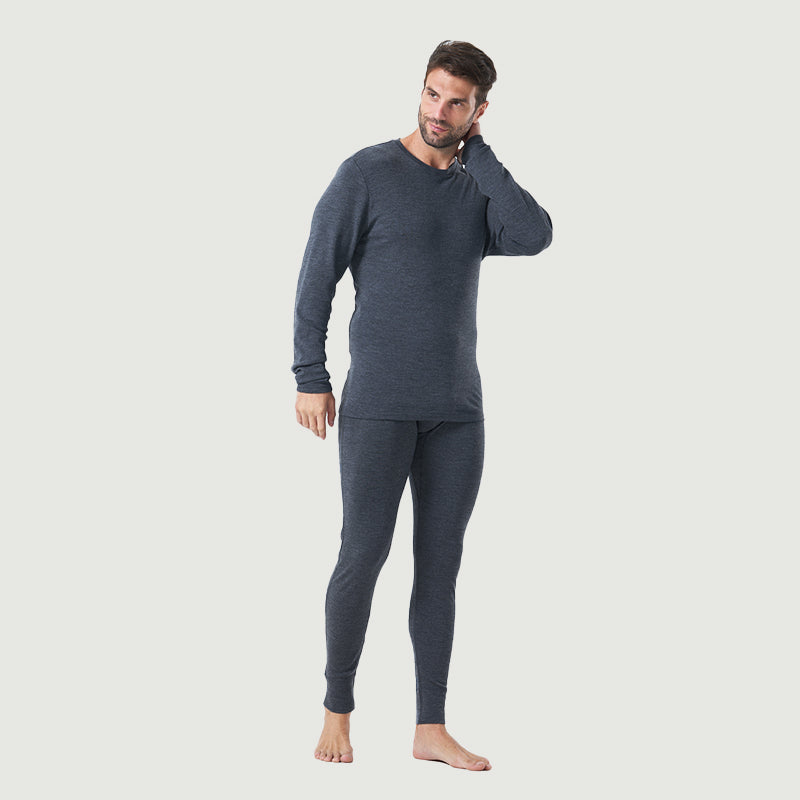
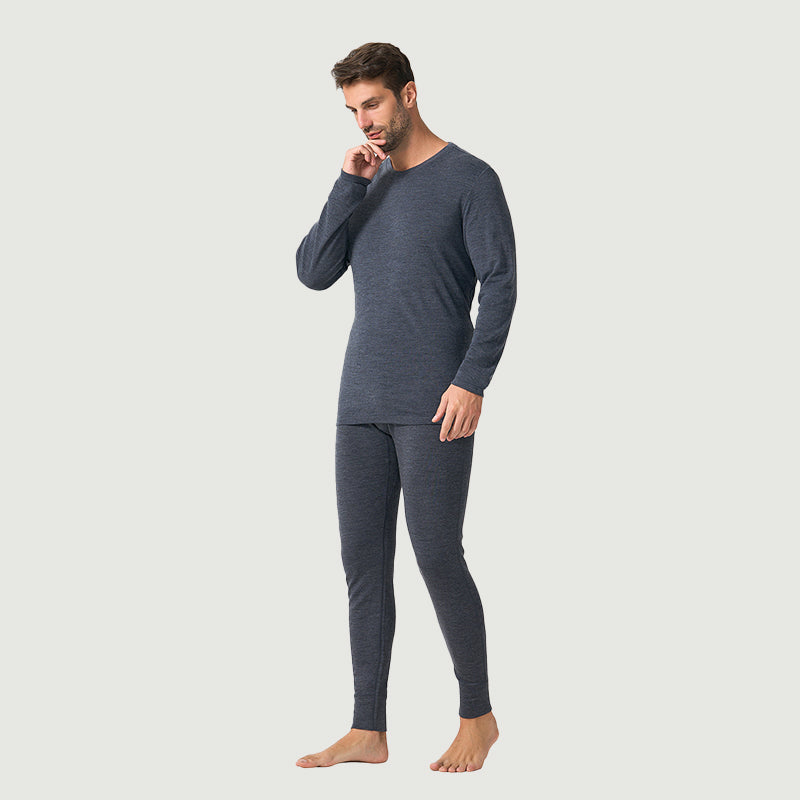
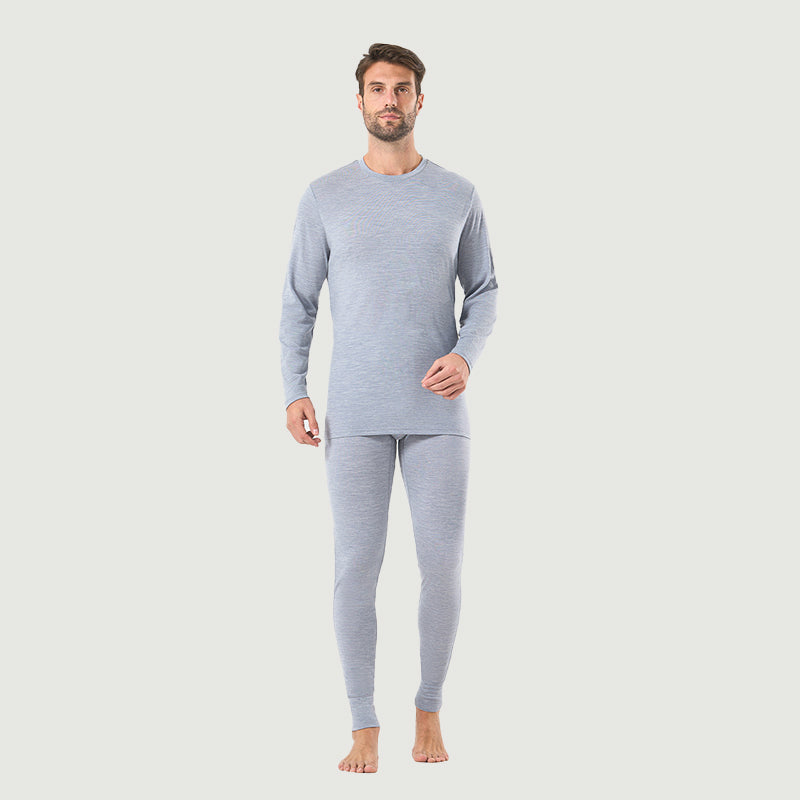
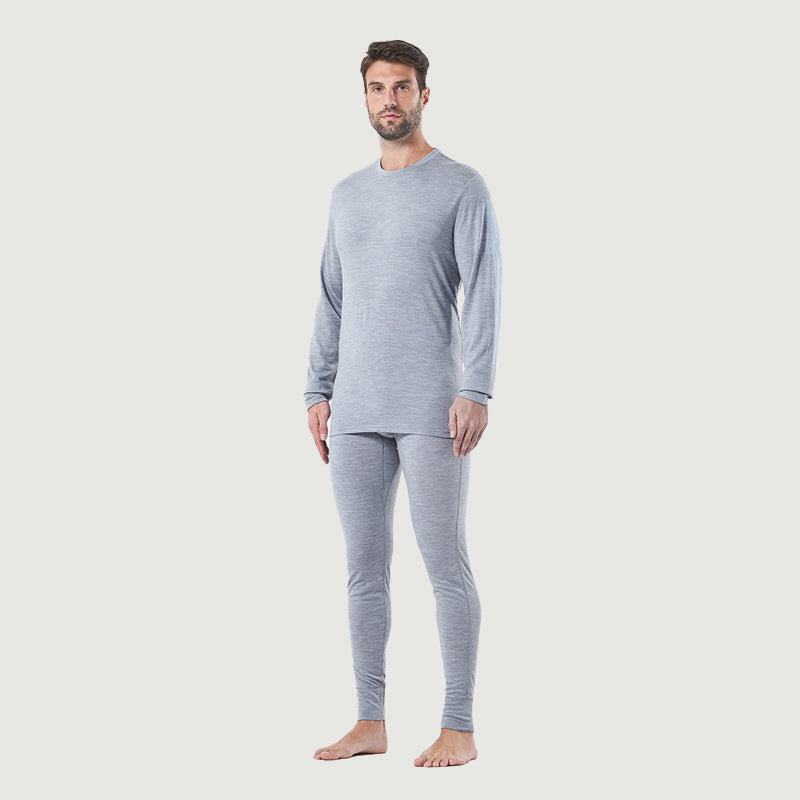
Men's merino wool leggings built for the cold — without the bulk, the smell, or the clammy feeling you get from synthetics. This collection covers two weights of 100% Australian merino wool base layer bottoms: a 200gsm option for active cold-weather pursuits and a 250gsm interlock-knit option for serious winter conditions. Both are built as the layer that goes closest to your skin, so everything above them performs better.
Why Merino Wool Works Better as a Base Layer Bottom
Synthetic thermals trap heat unevenly and hold onto moisture. Once you stop moving, they go cold and damp fast. Merino wool works differently. The fiber absorbs moisture — up to 30% of its own weight — locks it inside the fiber structure, and releases it gradually through evaporation. You stay dry-feeling even when you're working hard.
The thermoregulation is real too. On a cold morning hike where your output varies, merino adapts. It insulates when you're standing still and breathes when you're moving. Wool thermals from synthetic brands can't do that.
At 18.5 microns — finer than most human hair — the fiber bends on contact with skin rather than poking it. No itch. The same goes for the 200gsm option at 17.5 microns. Both sit comfortably against skin all day, even on the move.
Flatlock seams run throughout. They sit flat against the leg and don't create friction points under ski pants, waterproofs, or hiking trousers. Worth knowing if you've ever ended a day in the mountains with chafe marks from a seam.
Which Weight Do You Need?
200gsm — active and variable conditions. Hiking, trail running, ski touring, camping in spring or autumn, travel. Slim fit, lighter construction, breathes well when your output is high. This is the layer you reach for when you know you'll be generating heat.
250gsm — serious cold and low-output situations. Ski days on the lift, winter camping, hunting, ice fishing, cold commutes. The interlock double-knit construction adds wind resistance and noticeably more insulation. This is the one for standing still in freezing temperatures.
If you're unsure, the 200gsm handles more situations. If you're regularly in below-freezing conditions or spending time stationary outdoors, the 250gsm is worth it. For a full breakdown of how fabric weight affects warmth and performance, see our merino wool weight guide.
What These Are Built For
These merino wool leggings for men were designed around outdoor activity, not just winter commuting. They work as a base layer under ski pants, waterproof trousers, or hiking bottoms. They also work worn alone during trail runs, gym sessions, or high-output cold-weather activities where you don't want multiple layers.
For multi-day hiking or travel, the odor resistance matters more than people expect. Merino wool naturally neutralizes odor-causing bacteria. You can wear these for multiple days on the trail without them needing a wash — which is why they're a staple in one-bag travel kits and backcountry packs.
Cold-weather hunting and fishing are strong use cases too. Both involve long periods of being stationary in the cold, often followed by short bursts of high activity. That fluctuation is exactly what merino handles well.
Certifications and Standards
Every bottom in this collection is Woolmark Certified, OEKO-TEX Standard 100 Class I certified (the same standard used for baby clothing), and meets the Responsible Wool Standard for ethical sourcing. The wool is sourced from Australian Merino farms with verified animal welfare practices.
A 90-day warranty is included as standard. Register your purchase free of charge to extend that to one year.
These garments run slim. If you're between sizes or plan to wear them under fitted ski or hiking trousers, size up one size for a comfortable, unrestricted fit.
Frequently Asked Questions
Can merino wool leggings for men be worn on their own or only as a base layer?
Both. The slim, athletic fit and non-transparent construction mean they work worn alone for trail runs, gym sessions, or high-output cold-weather activity. They're equally at home under ski pants, hiking trousers, or waterproofs as a base layer. The 200gsm is the more versatile standalone option. The 250gsm is primarily a base layer for serious cold.
How warm are merino wool leggings for men compared to synthetic base layers?
Warmth depends on weight. The 200gsm option handles active cold-weather use — hiking, skiing, trail running — where you're generating body heat. The 250gsm interlock knit is built for stationary cold: lift queues, winter camping, hunting. In real terms, a 250gsm merino bottom is noticeably warmer than most midweight synthetic thermals and significantly more comfortable over a full day.
Can I wear merino wool long johns for skiing and snow sports?
Yes — both weights work well under ski pants. The 250gsm is the better choice for resort skiing where you spend time on lifts and in cold conditions without high output. The 200gsm suits ski touring or more active snow sports. The slim fit and flatlock seams mean neither adds bulk or creates pressure points under fitted ski trousers.
Are merino wool base layer bottoms good for hiking?
They're one of the best choices for hiking, specifically because of the temperature regulation. Output varies constantly on a trail — steep climbs, descents, rest stops — and merino adapts throughout. The 200gsm is the right weight for three-season hiking. For winter mountain conditions, the 250gsm gives more insulation on rest stops and cold summit days. Both handle multi-day trips well thanks to natural odor resistance.
How do I wash merino wool thermal pants?
Machine wash on a cool, gentle cycle. Use a mild detergent — wool-specific if possible. Do not tumble dry on high heat; lay flat or hang to dry. Because merino resists odor naturally, you won't need to wash after every single use. Airing them out between wears is enough for most activities.
Also explore our Men's Merino Base Layer Tops to complete the system, or shop the full Men's Merino Wool Collection for all categories.